
An interview with Hugo Delgado, Executive Director of Novasalud, Inc.
Landing Rock serves many nonprofit organizations with its high yield account for savings, known as the Insured Deposit Account. We also strive to offer valuable insights to our customers, and the markets in which they operate. Recently we interviewed Hugo Delgado, Executive Director of Novasalud, Inc. in Falls Church, Virginia. In recognition of his leadership and longstanding commitment to combating HIV/AIDS, Mr. Delgado received a Certificate of Recognition from the City of Alexandria, Virginia, honoring his outstanding contributions and active involvement in the fight against HIV/AIDS and his dedication to improving the health and well-being of the community.
LR: Hello Hugo, thanks for taking the time to speak with us today. Can you start by giving us a brief history of your background?
HD: I’ve spent more than 22 years providing HIV prevention, care, and support services throughout Northern Virginia. As Executive Director and Co-Founder of NovaSalud, Inc., my role is to develop innovative, community-based strategies to improve access to HIV prevention and treatment services for underserved and disproportionately affected populations.
Our model emphasizes delivering services at locations and times that maximize accessibility, trust, and community engagement, resulting in increased participation in HIV testing, prevention, and linkage to care.
I’m also responsible for organizational leadership, strategic planning, contract and grant development, fundraising, and partnership cultivation. We secure more than $2 million annually in public and private funding to support comprehensive HIV prevention, care, behavioral health, and supportive services throughout the area we serve.
LR: How do you feel your model is performing in the community?
HD: We’re proud of our results, and the statistics show it’s working. Our innovative community outreach and testing initiatives achieved an HIV positivity rate of approximately 2%, demonstrating the effectiveness of targeted, data-driven outreach strategies in identifying individuals living with HIV and rapidly linking them to care.
LR: That sounds like great news, congratulations! How can you keep that kind of positive momentum?
HD: One thing we believe strongly is to educate as many people as we can about what we do. I spend time participating in local, state, and federal legislative hearings, policy forums, and public health advisory committees. In addition I regularly collaborate with elected officials, public health agencies, community stakeholders, and the media to advance policies that improve access to HIV prevention, treatment, and supportive services for vulnerable populations.
LR: How and why did you become the Executive Director of Novasalud?
I became the Executive Director of NovaSalud because I wanted to address the significant health disparities affecting Latino and other underserved communities, particularly in the areas of HIV prevention, care, and overall health equity. Throughout my career, I witnessed the barriers that many individuals face, including stigma, lack of access to healthcare, language differences, poverty, and fear of seeking services. These experiences inspired me to take on a leadership role where I could create meaningful and lasting change.
Leading a nonprofit has allowed me to combine my passion for public health with strategic planning, fundraising, organizational development, and community advocacy. One of the most rewarding aspects of this role is seeing individuals who once faced tremendous barriers become engaged in care, achieve better health outcomes, and regain hope for their future.
I remain committed to strengthening the nonprofit sector by promoting collaboration, innovation, accountability, and equity. My goal is not only to ensure that our organization delivers high-quality services but also to advocate for policies and systems that eliminate health disparities and improve the well-being of the communities we serve. Every success story reminds me why I chose this path and reinforces my belief that NovaSalud plays a critical role in creating healthier, stronger, and more equitable communities.
LR: I must apologize in advance because I’m sure everyone asks this question, but the name Novasalud is very intriguing. Please tell us how it came about.
NovaSalud represents “New Health”—a new beginning founded on hope, dignity, equity, and access to quality healthcare. The name embodies the organization’s commitment to empowering individuals, families, and communities—particularly those affected by HIV—to achieve healthier lives through compassionate, culturally responsive, and person-centered care.
The name also reflects NovaSalud’s deep connection to Northern Virginia (NoVA), where the organization was founded and continues to serve diverse communities. This subtle association reinforces NovaSalud’s identity as a trusted community partner dedicated to improving health outcomes across the region while remaining meaningful to both English- and Spanish-speaking audiences.
By combining the familiar regional identity of “NoVA” with the Spanish word “Salud” (meaning health), the name is distinctive, memorable, and culturally inclusive. It symbolizes the organization’s commitment to bridging cultures, reducing health disparities, and ensuring that everyone—regardless of language, background, or circumstances—has access to equitable, high-quality healthcare.
LR: You mentioned to us in a prior conversation that one of your goals is to let more people know about your organization. What is the message you want send?
More than a name, NovaSalud represents a vision of healthier communities, stronger partnerships, and renewed hope. It embodies the organization’s commitment to ensuring that every individual has the opportunity to thrive with dignity, respect, and compassionate, high-quality care. Guided by the principles of equity, inclusion, and community empowerment, NovaSalud strives to create lasting change by expanding access to healthcare, reducing disparities, and fostering healthier, more resilient communities for all.
LR: Another interesting thing we noticed when looking at your website is you have several phlebotomists on the team. Can you tell us what their role is within the organization?
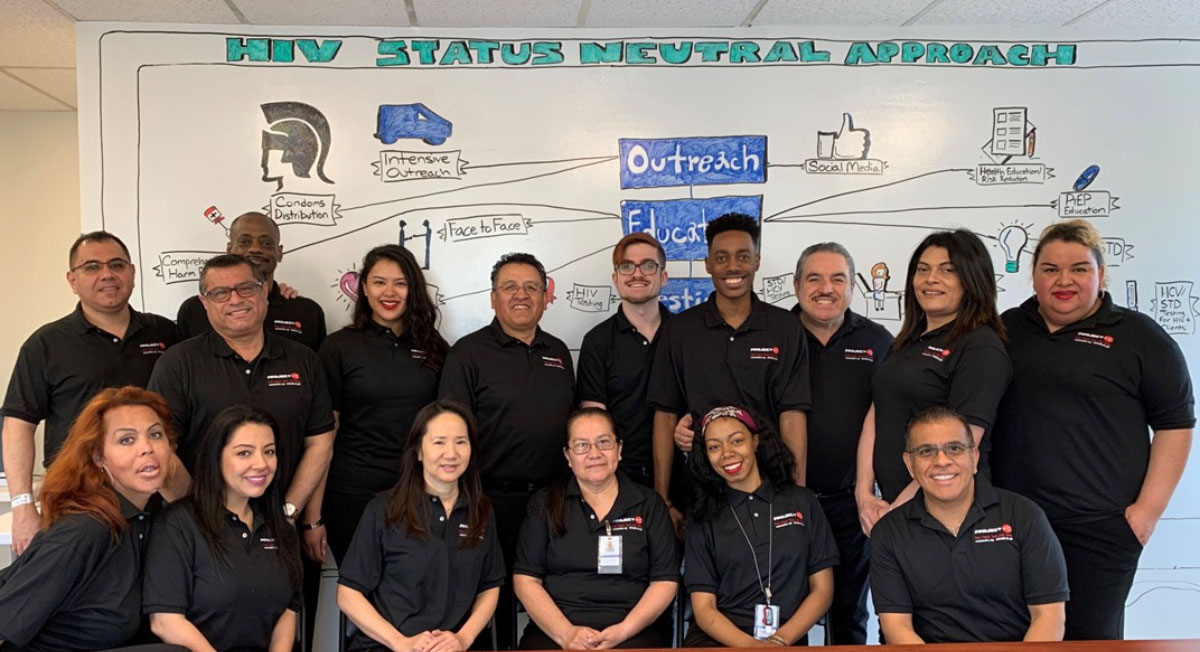
Having several phlebotomists on the NovaSalud team reflects the organization’s commitment to providing comprehensive, community-based HIV and sexual health services. Rather than serving only as individuals who draw blood, NovaSalud’s phlebotomists are integral members of a multidisciplinary care team that helps ensure clients receive timely testing, diagnosis, treatment, and follow-up.
At NovaSalud, phlebotomists are more than laboratory technicians—they are frontline public health professionals. Their work helps identify new HIV infections earlier, monitor the health of people living with HIV, connect clients to lifesaving treatment, and strengthen trust between the organization and the communities it serves. By integrating phlebotomy into outreach, prevention, and care services, NovaSalud is able to provide faster, more coordinated, and more patient-centered healthcare.
LR: Ok last question, if you could change one thing about the healthcare system in the United States, what would it be?
In a nutshell, it would be to ensure that everyone has timely, affordable access to high-quality primary and preventive care, regardless of their income, employment, insurance status, or where they live.
Many of the most significant health challenges in the United States arise because people delay seeking care due to cost or limited access. When individuals cannot afford routine checkups, medications, mental health services, or preventive screenings, conditions such as diabetes, hypertension, HIV, and cancer are often diagnosed at more advanced stages. This leads to poorer health outcomes for patients while increasing healthcare costs for families, providers, and the healthcare system as a whole.
Achieving this goal also requires stronger investment in community health centers and nonprofit healthcare organizations that provide culturally responsive, language-accessible, and patient-centered care. Services such as patient navigation, community health workers, interpretation, transportation assistance, and care coordination help people overcome barriers related to language, transportation, insurance, and trust. These supports are essential for ensuring that healthcare is not only available but truly accessible.
Ultimately, the strength of a healthcare system should be measured not only by the quality of its hospitals, technology, or medical innovations, but by whether every person can receive the care they need when they need it. Expanding equitable access to primary and preventive care would improve health outcomes, reduce longstanding health disparities, lower avoidable healthcare costs, and build healthier communities across the nation.
Disclosure: Insights content is not financial advice. Please be sure to do your own due diligence and speak to your financial advisor before making any investment decisions.